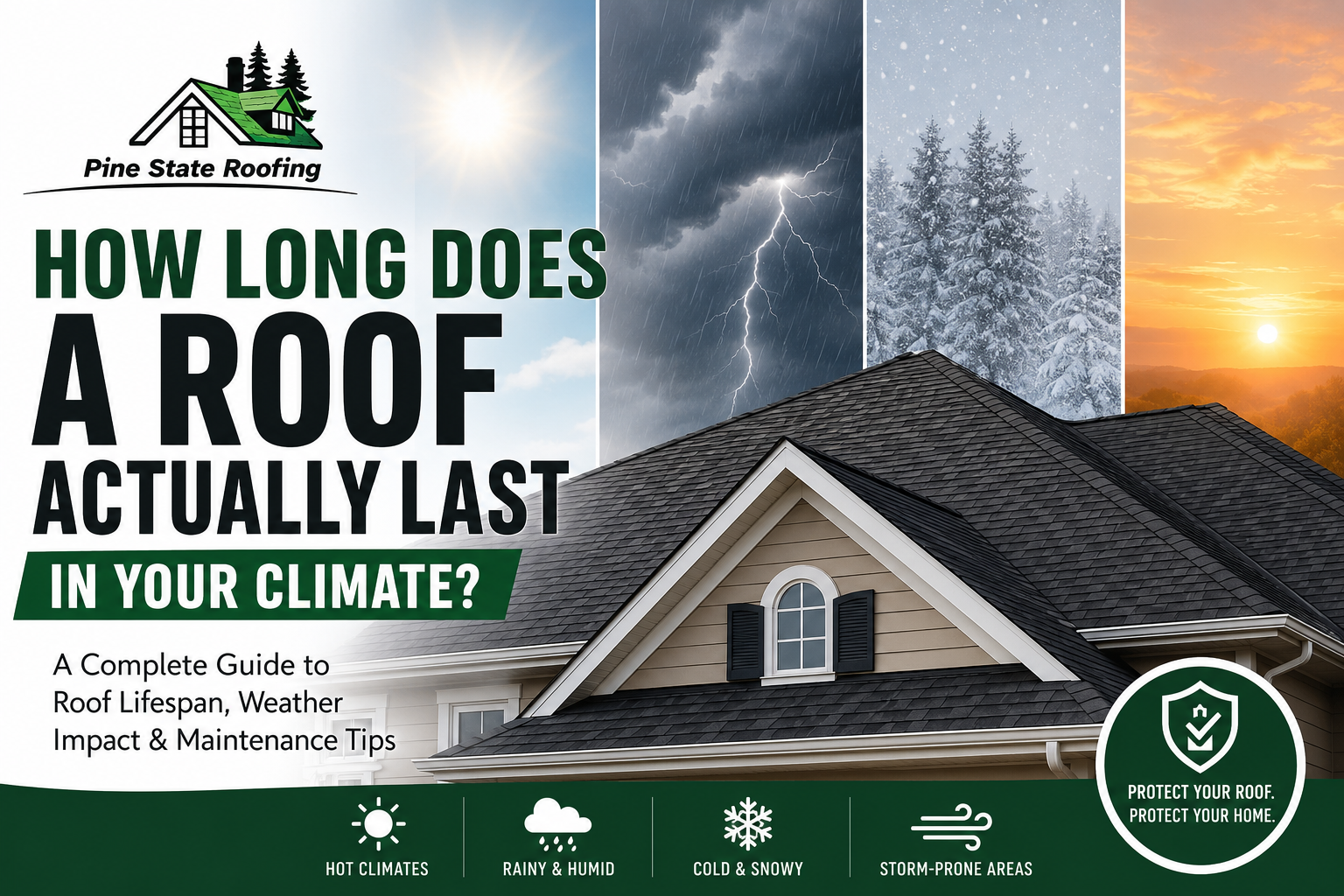
Your roof protects your home from rain, wind, snow, heat, and everything nature throws at it. But one question many homeowners ask is: How long does a roof actually last?
The answer is not always simple. A roof’s lifespan depends on several factors, including the roofing material, weather conditions, maintenance, installation quality, and local climate.
A roof in a mild climate may last decades longer than the same roof in an area with heavy storms or extreme heat. Understanding how climate affects your roof can help you plan maintenance, avoid expensive roof repairs, and know when replacement is necessary.
In this guide, we will explain how long roofs typically last, how different climates affect them, warning signs of roof damage, and what homeowners can do to maximize roof lifespan.
Why Climate Plays a Major Role in Roof Lifespan
Many homeowners believe roofing material alone determines how long a roof lasts. While material matters, climate is one of the biggest factors affecting durability.
Extreme weather conditions slowly wear roofing materials down over time. Constant exposure to sunlight, moisture, snow, wind, or rapid temperature changes can shorten a roof’s expected lifespan.
For example:
- Homes in hot climates often experience sun damage and cracking.
- Cold climates deal with snow buildup and ice dams.
- Storm-prone regions face wind and hail damage.
- Humid areas experience mold, algae, and moisture problems.
Even the best roofing system can wear out faster if it is constantly exposed to harsh environmental conditions.
Average Roof Lifespan by Roofing Material
Before discussing climate effects, it helps to understand how long common roofing materials generally last.
Asphalt Shingle Roofs
Asphalt shingles are one of the most popular roofing materials because they are affordable and durable.
Typical lifespan:
- 3-tab shingles: 15–20 years
- Architectural shingles: 20–30 years
- Premium shingles: Up to 40 years
However, extreme heat, hail, and storms can reduce their lifespan significantly.
Metal Roofs
Metal roofs are known for strength and longevity.
Typical lifespan:
- 40–70 years
Metal performs well in many climates because it resists moisture, sheds snow easily, and handles heat efficiently.
Tile Roofs
Clay and concrete tiles are extremely durable.
Typical lifespan:
- 50–100 years
Tile roofs perform well in warm climates but may crack in freeze-thaw environments if not properly maintained.
Wood Shake Roofs
Wood roofs offer a natural appearance but require maintenance.
Typical lifespan:
- 20–40 years
Moisture-heavy climates may shorten lifespan because wood can rot or develop mold.
Slate Roofs
Slate is one of the longest-lasting roofing materials.
Typical lifespan:
- 75–100+ years
Although expensive, slate roofs are incredibly durable in many weather conditions.
How Long Does a Roof Last in Hot Climates?
Hot climates can be surprisingly harsh on roofing materials.
Intense sunlight and high temperatures constantly expose roofs to UV radiation, which causes materials to dry out, weaken, and crack.
Common Roofing Problems in Hot Areas
Sun Damage
Strong sunlight slowly breaks down roofing materials. Asphalt shingles often become brittle and lose protective granules.
Thermal Expansion
Roofing materials expand during the day and contract at night. Over time, this repeated movement causes wear and tear.
Heat Trapping
Poor ventilation can trap heat inside the attic, accelerating roof aging from underneath.
Estimated Lifespan in Hot Climates
- Asphalt shingles: 15–20 years
- Metal roofing: 40–60 years
- Tile roofing: 50+ years
How to Extend Roof Life in Hot Areas
- Improve attic ventilation
- Choose reflective roofing materials
- Schedule regular inspections
- Replace damaged shingles quickly
Light-colored roofs can also reflect sunlight and reduce heat absorption.
How Long Does a Roof Last in Cold and Snowy Climates?
Cold regions bring different challenges. Heavy snowfall, freezing temperatures, and ice can put major stress on roofing systems.
Common Roofing Problems in Cold Areas
Ice Dams
Ice dams form when snow melts and refreezes near roof edges. This blocks drainage and allows water to seep underneath shingles.
Freeze-Thaw Damage
Water enters small cracks and freezes. As it expands, roofing materials can crack or loosen.
Snow Weight
Excess snow buildup adds pressure to the roof structure.
Estimated Lifespan in Cold Climates
- Asphalt shingles: 20–30 years
- Metal roofing: 50+ years
- Slate roofing: 75+ years
How to Extend Roof Life in Cold Areas
- Keep gutters clean
- Improve attic insulation
- Prevent ice dam formation
- Remove excessive snow buildup when needed
Proper ventilation also helps maintain stable roof temperatures.
How Long Does a Roof Last in Rainy or Humid Climates?
Moisture is one of the biggest threats to roof health.
Areas with frequent rain or high humidity often experience roof deterioration from water damage.
Common Roofing Problems in Humid Areas
Mold and Mildew Growth
Constant moisture creates the perfect environment for mold and algae.
Roof Leaks
Water intrusion becomes more common if flashing or shingles weaken.
Wood Rot
Wood-based roofing materials can absorb moisture and deteriorate.
Estimated Lifespan in Humid Climates
- Asphalt shingles: 15–25 years
- Metal roofing: 40–60 years
- Wood shingles: 20–30 years
How to Extend Roof Life in Humid Areas
- Remove moss and algae regularly
- Trim overhanging branches
- Improve roof drainage
- Schedule yearly inspections
Routine maintenance becomes especially important in wet climates.
How Long Does a Roof Last in Storm-Prone Areas?
Homes exposed to severe weather often experience faster roof damage.
Strong winds, hail, heavy rain, and falling debris can reduce lifespan significantly.
Common Roofing Problems in Storm Regions
Wind Damage
High winds can loosen or remove shingles completely.
Hail Damage
Hail may crack shingles and weaken protective layers.
Water Penetration
Storm damage creates openings for leaks.
Estimated Lifespan in Stormy Climates
- Asphalt shingles: 15–25 years
- Impact-resistant shingles: 25–35 years
- Metal roofing: 40–70 years
How to Extend Roof Life in Storm Areas
- Choose impact-resistant materials
- Inspect after severe storms
- Replace damaged flashing quickly
- Keep trees trimmed near the roof
A professional inspection after major weather events can catch hidden problems early.
Signs Your Roof May Be Near the End of Its Life
Even if your roof has not reached its expected age, damage may mean replacement is needed sooner.
Watch for these warning signs:
Curling or Missing Shingles
Shingles that curl, crack, or disappear indicate aging.
Granule Loss
If you see shingle granules in gutters, your roof may be deteriorating.
Frequent Leaks
Repeated water issues often suggest larger roofing problems.
Sagging Roof Areas
A sagging roof can indicate structural damage and should be inspected immediately.
Moss or Algae Growth
While sometimes cosmetic, excessive growth may trap moisture and damage materials.
Rising Energy Bills
Poor roof performance can reduce insulation efficiency, increasing heating and cooling costs.
What Impacts Roof Lifespan Besides Climate?
Climate matters, but several other factors also affect roof durability.
Installation Quality
Even premium materials fail early if installed incorrectly. A poorly installed roof often develops leaks, loose shingles, and ventilation problems.
Roof Ventilation
Proper airflow helps regulate attic temperatures and moisture levels. Poor ventilation can shorten roof life significantly.
Maintenance Habits
Regular maintenance prevents small problems from becoming major repairs. Simple upkeep like gutter cleaning and inspections can add years to your roof’s lifespan.
Tree Coverage
Large branches hanging over a roof increase the risk of falling debris and moisture buildup.
Roof Maintenance Tips to Make Your Roof Last Longer
You can greatly extend your roof’s life with proper care.
Schedule Regular Inspections
Have your roof inspected at least once per year.
Clean Gutters Frequently
Blocked gutters cause water to back up under roofing materials.
Fix Small Problems Quickly
Minor issues are cheaper to repair before they become serious.
Remove Debris
Leaves and branches trap moisture and encourage mold growth.
Check After Major Storms
Inspect for missing shingles or visible damage after severe weather. Homeowners who invest in preventive maintenance often delay roof replacement for many years.
When Should You Replace Instead of Repair?
Sometimes repairs are enough. Other times, replacement is the smarter investment.
You may want to replace your roof if:
- It is near the end of its expected lifespan
- Repairs are becoming frequent
- Large sections are damaged
- Storm damage is severe
- Energy efficiency is declining
A roofing professional can inspect your roof and recommend the best option.
For homeowners unsure about their roof’s condition, trusted professionals like Pine State Roofing LLC can help assess wear, identify hidden problems, and recommend practical solutions based on your local climate.
Final Words
So, how long does a roof actually last in your climate?
The answer depends on your roofing material, weather conditions, maintenance routine, and installation quality.
In mild climates, roofs may reach or exceed their expected lifespan. In extreme heat, heavy storms, snow, or humid environments, roofs may wear out faster.
The best way to protect your investment is through regular inspections, proper maintenance, and addressing problems early.
Understanding how climate affects your roof can help you avoid expensive surprises and make smarter decisions about repairs or replacement before major damage happens.
